The Maltese tradition of the village festa (or feast) has been around for centuries, evolving through the years to what it is today.
Saint Publius’ external festa in Floriana sets off the summer festa season in Malta, meaning the festa season starts a fortnight after Easter Sunday with the aforementioned festa.
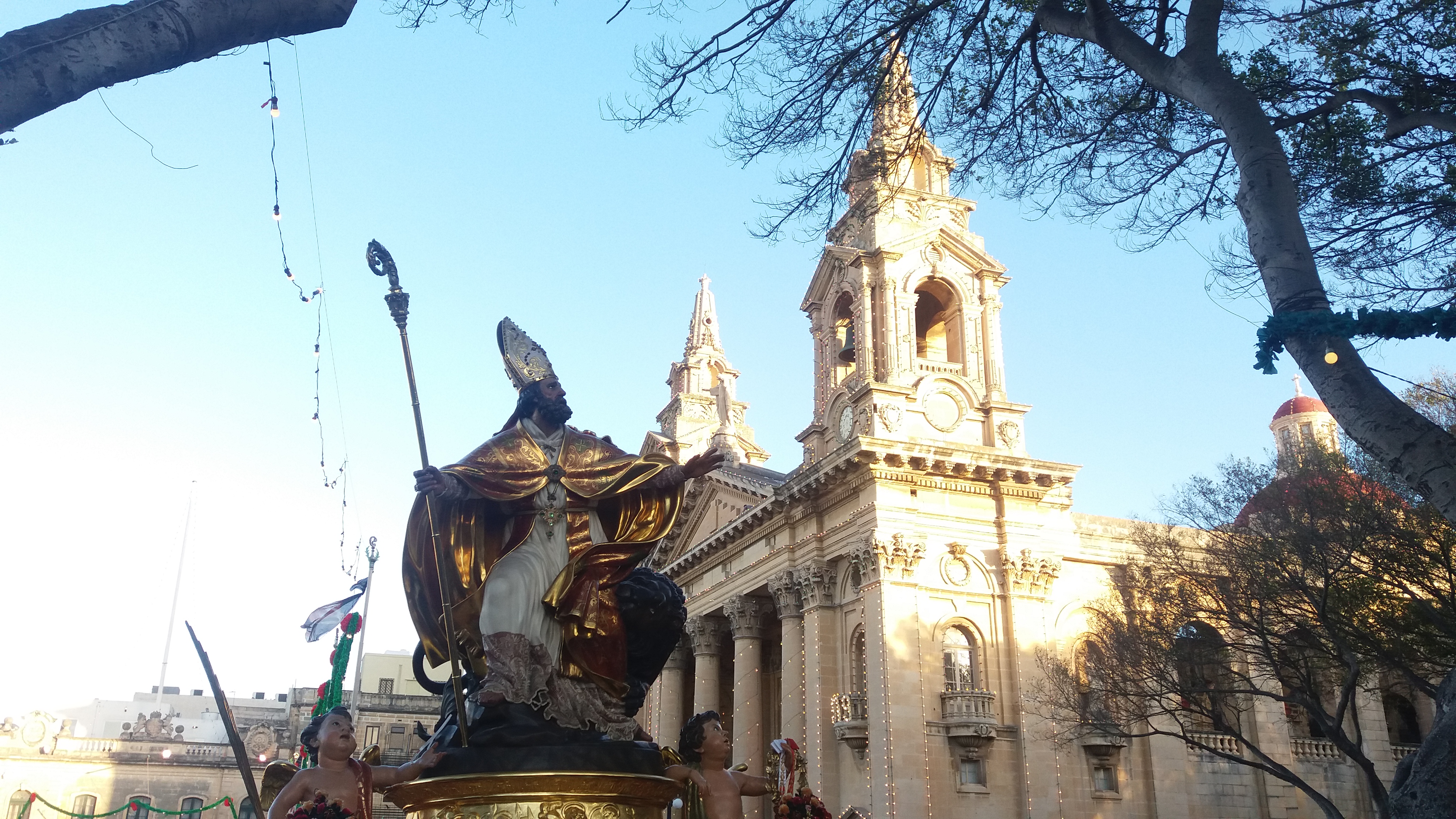
Saint Publius, Floriana [5 May 2019]
The festa is a gathering for all the residents inside a locality, as well as for those from outside the locality. It is an annual celebration of that locality’s patron saint, where devotees come together to give praise to their patron saint. That’s not all though.
The festa is given colour by the use of pyrotechnical displays. Fireworks take-over the sky, turning from a single spark to a burst of different colours. These kaleidoscopic spectacles are always awaited by those people who attend the festa.
The melodious sound of ensembles of brass, woodwind and percussion instruments (the Maltese banda or band) mesmerise the streets of the locality, accompanying a number of processions during the festa week.
Stands selling food, sweets, nougat and toys are set up, usually in close proximity to one another. If there weren’t any food it wouldn’t be Maltese now, would it?
In some localities, the locals celebrate more than one festa. Some celebrate not one, not two, not three, but four festas in summer! And locals choose sides! In Għaxaq, the Għaxqin (Għaxaq locals) go as far as making Saint Joseph and Our Lady rivals!
In many localities, rivalry also exists between band clubs, pyrotechnic clubs and those who set up the decorations. The locals choose sides here too! The only thing that unites the rivals is their patron saint.
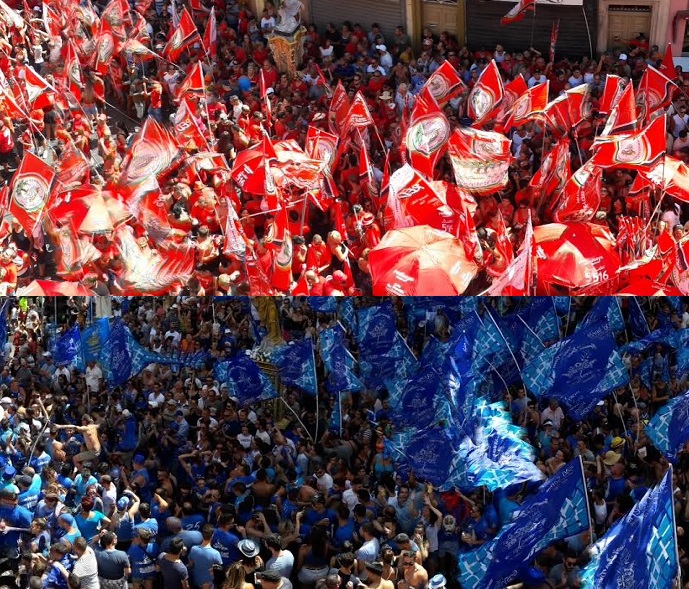
The festa of Saint Cajetan in Ħamrun – tal-Miskina (in blue) & tat-Tamal (in red), two of Ħamrun’s band clubs {Photo: tvm.com.mt}
The majestic churches celebrating their festa decorate their interior with damask, religious relics and other decor, giving them the importance they deserve. A statue of the patron saint is placed at the centre of the religious temple and is usually lit with a spotlight. Lights light up the church’s façade, making it a monument in the middle of the whole festa.
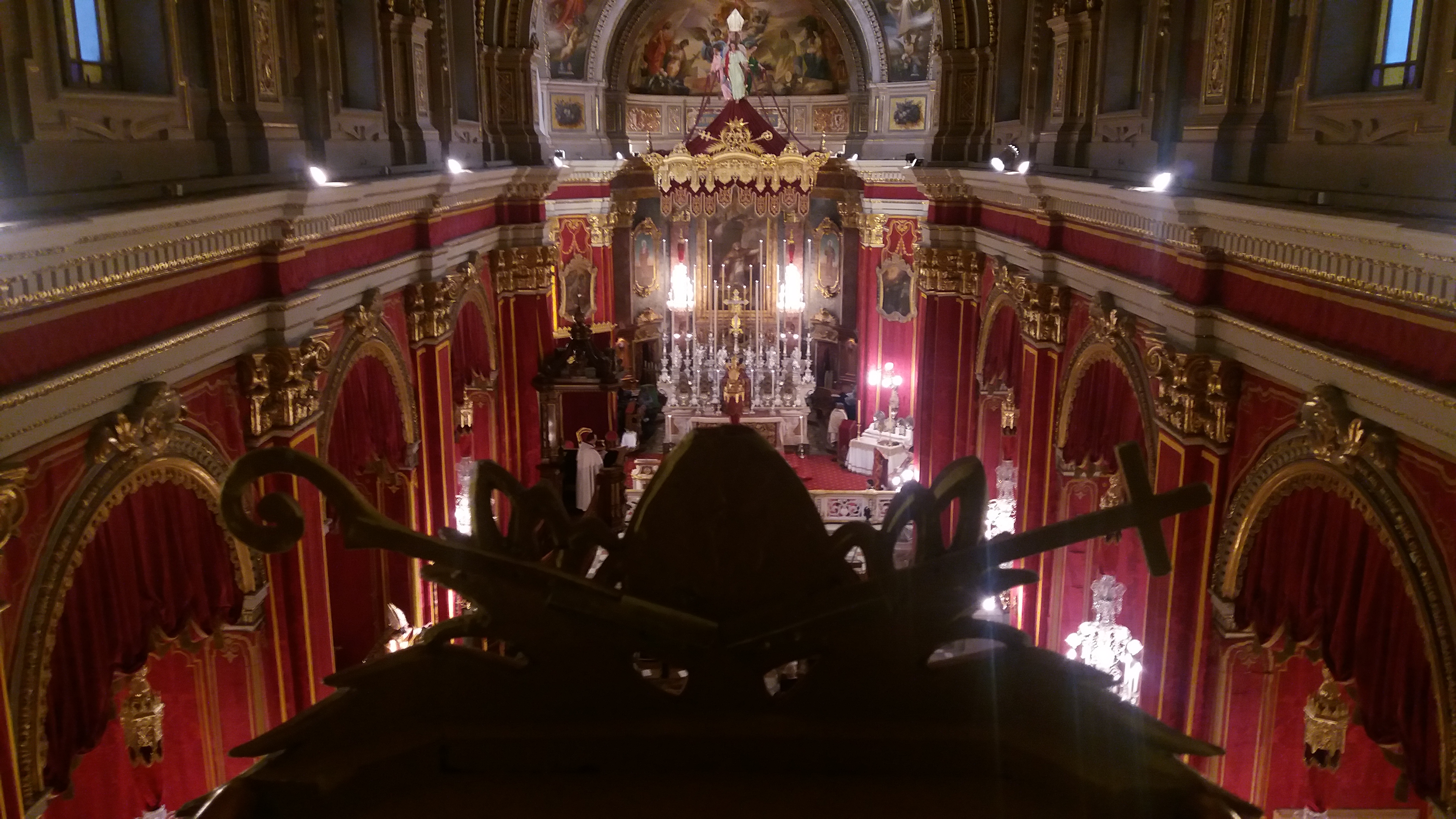
The interior of Saint Publius’ church in Floriana [1 May 2019]
The streets are also decorated with pavilions, banners and statues of religious figures, to name a few.
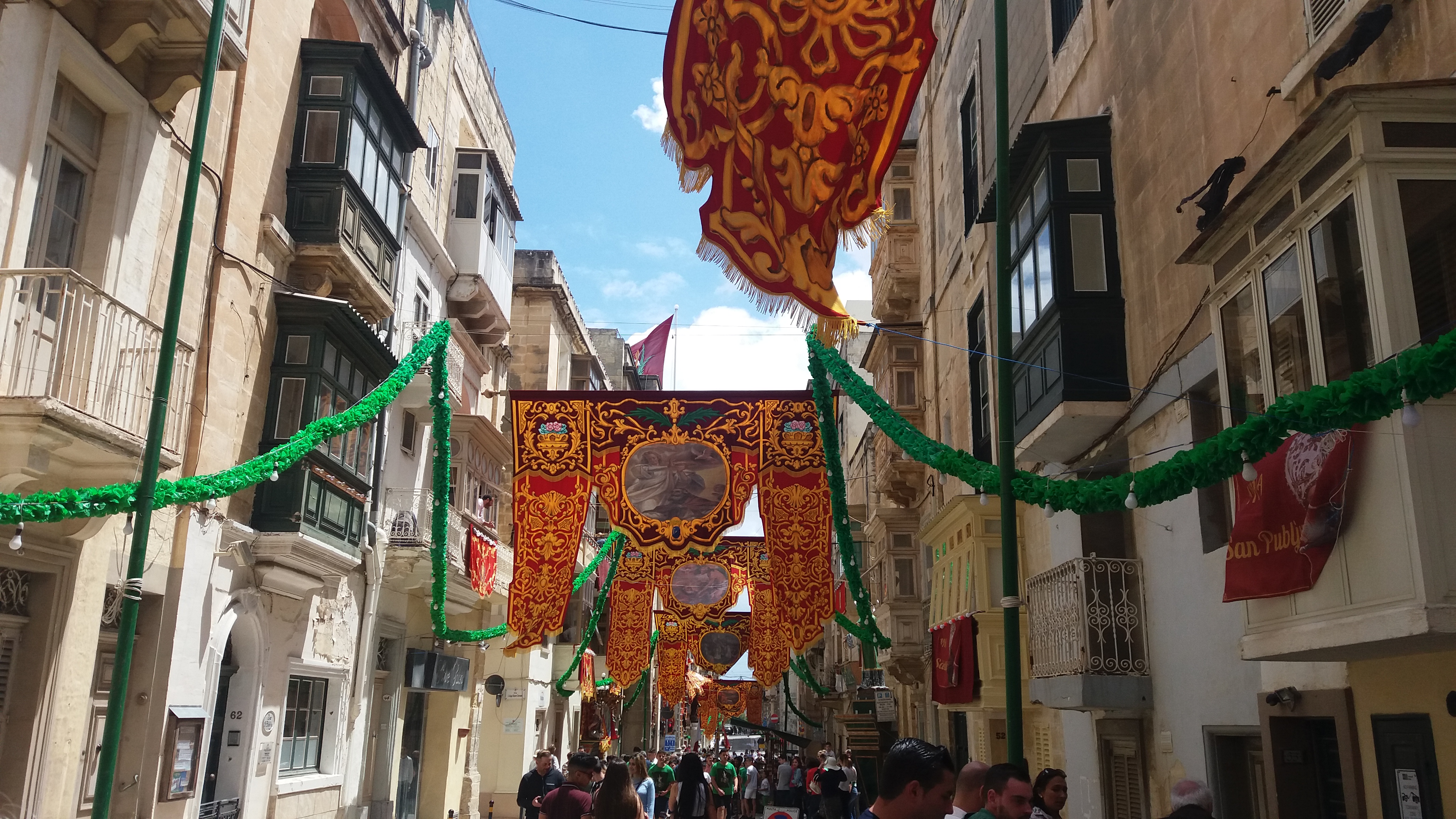
Pavilions in Gunlayer Street, Floriana [5 May 2019]
On the day of the festa, a Pontifical mass takes place in the parish church in the morning. People of authority such as Members of Parliament, the President of the Republic of Malta and the Archbishop of Malta are many times present.
Afterwards, locals take part in a grand march were they, accompanied by the banda (band club or clubs), sing chants, drink and celebrate, the majority wearing same-coloured clothes. In some places, toys, lilos, balls and other goodies are thrown from balconies at crowds of children and adults below, waiting to catch whatever gets thrown their way.
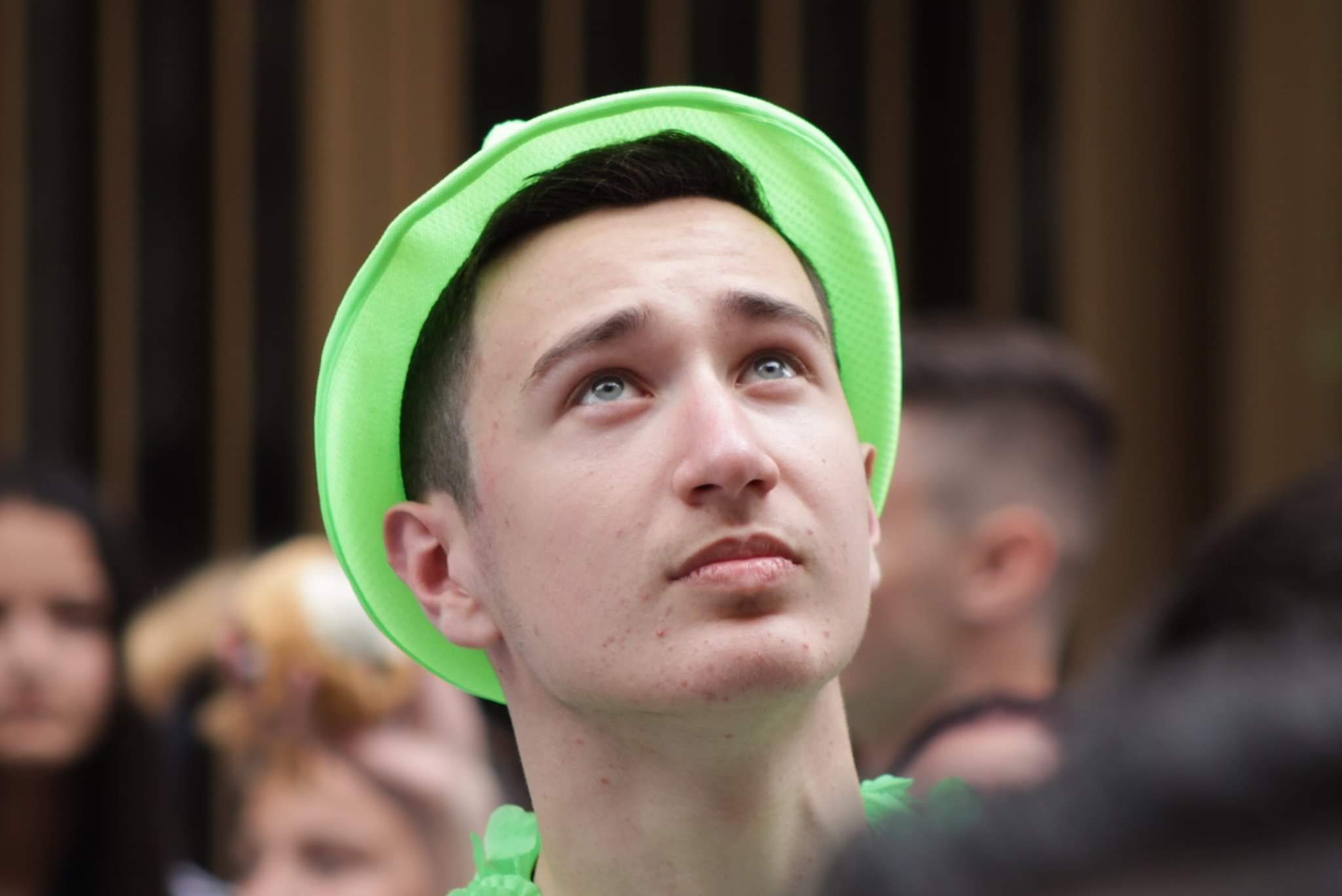
Looking at the balconies during the Sunday march of Saint Publius’ festa in Floriana {Photo: Mark Galea} [5 May 2019]
In the evening, after a procession with the statue of the patron saint, masses of people assemble to watch the statue re-enter the church, welcoming it with clapping, cheering and the singing of the saint’s antifona or hymn.

Saint Publius’ statue re-entering Floriana’s church [5 May 2019]
If you’re in Malta during summertime, you are sure to find yourself immersed in the tradition that is the village festa.
To see a list of this summer’s (2019) festa dates, click here.
 Bradley Cachia